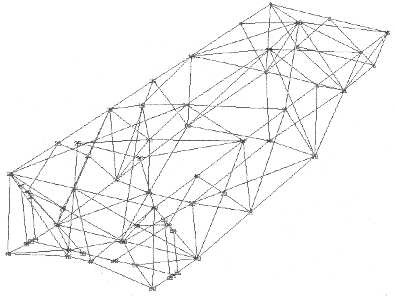












| Anatomy of a modern front-engined Clubmans car.
Mallock Mk31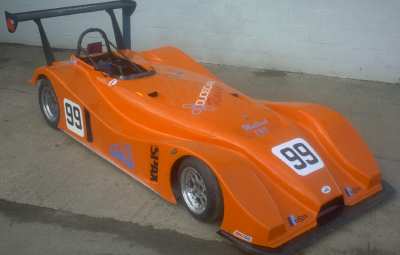 The EBX bodywork, as shown here on Tim Covill's Mk27SG chassis is the ideal compliment to the Mk31 as it is to all long wheelbase Mallocks. The EBX bodywork, as shown here on Tim Covill's Mk27SG chassis is the ideal compliment to the Mk31 as it is to all long wheelbase Mallocks.
The success of the chassis relies greatly on its torsional rigidity which in turn, vastly improves the quality of the all-important 'driver feedback'. This is enhanced due to the lack of 'flex' within the chassis, which produces far greater stability as the car changes direction and is subsequently quicker into and through the corners. The suspension set up can be easily optimised to suit both driver and circuit, as the nature of the chassis gives consistent and reliable results from any back to back testing.
Other chassis features include: - Weight saving from both the chassis and reduced panelling.
- Aerodynamic floor pan arrangement.
- Detachable chassis tube in engine bay - for ease of access as well as an option to 'soften'.
- push-rod front suspension/pull-rod rear suspension.
Push-rod front/ Pull-rod rear suspension combined with monotube dampers.
The primary advantage is a spring base increased some 35% and as roll resistance increases as a square factor, this is almost doubled. Even more important is the increase in damper base. Again, there are several incidental gains - the CofG is lowered and unsprung weight is reduced, as the damper body is sprung. The old arrangement made it difficult to strike a compromise between ride height and damper stroke, quite impossible with monotube dampers. With push-rod/pull-rod, there is complete freedom of damper length choice and ride-height can be set to any number just by adjusting the rod lengths, as can the corner weights. Spring pre-load is set equal at any desired number.
All dampers will be monotube, which can give the progressive characteristics required from modern suspension systems, impossible with twin-tube. The piston area is some four times greater with better consistency, less fade and longer life. There is effective damping over the first 5mm of travel, so important with short travel systems but not found with twin tube.
Mallock MK31 - the latest chassis technology
The Mk31 chassis has been designed by ex Mallock racer Mike McDermott, an engineering consultant and founder of Cosine Technology.
"It is generally accepted that high torsional stiffness in a chassis is a good thing. With this in mind the chassis was designed for maximum torsional rigidity and minimum weight. This was done using a unique 'finite element' analysis technique developed specially for spaceframes. It works by simulating the chassis and its performance under load in a computer. A large number of possible structures can be visualised and examined before construction is begun. As well as calculating the overall torsional rigidity the software computes the various stresses in each tube in the frame so its shape and size can be optimised. The insight this gives led to several unconventional features in the design, notably the complex angles at which many of the tubes are positioned. The calculation method has been refined so that it predicts torsional stiffness to within a few percent of what is actually measured when the prototype has been built. In this case the result was a stiffness of over 8000 ft lb per degree of twist between front and rear suspension pickups. This represents a substantial gain over previous designs with no weight penalty."
Mallock Mk31 Specification to suit Rover/Zetec power unit.- Chassis High-rigidity chassis, incorporating TAM4, pull/push-rod suspension, powdercoated.
- Suspension Elliptical top & bottom wishbones, to suit anti-droop system
Bellcranks, rods, Bilstein dampers, 2.25" springs. - Axle Ford axle with twin-bearing axle ends, high-strength shafts, aluminium hubs.
- Axle Location Mumford linkage.
- Diff Ford diff (aluminium casing optional).
- Gearbox Quaife 4-speed 'dog' box (aluminium casing optional).
- Front uprights Fabricated front uprights, high-angular double-row bearings.
- Brakes Front 4-pot aluminium A.P. calipers, 10.75" solid disc, Rear 2-pot aluminium calipers, 10.5" disc
Full aeroquip, AP 'racing' master cylinders. - Steering Aluminium cased 'racing' rack & pinion, optional ratios. Fabricated steering arms.
- Wheels Single-bolt fixing one-piece magnesium or aluminium billet centre 3-piece wheels.
- Bodywork Kevlar lightweight body panels conventional Mk31 design or new all-enveloping 2001 spec.
- Rear Wing Single plane aluminium wing, carbon/honeycomb supports, adjustable under-plates
For more information contact: mallock@mallocksports.freeserve.co.uk |